
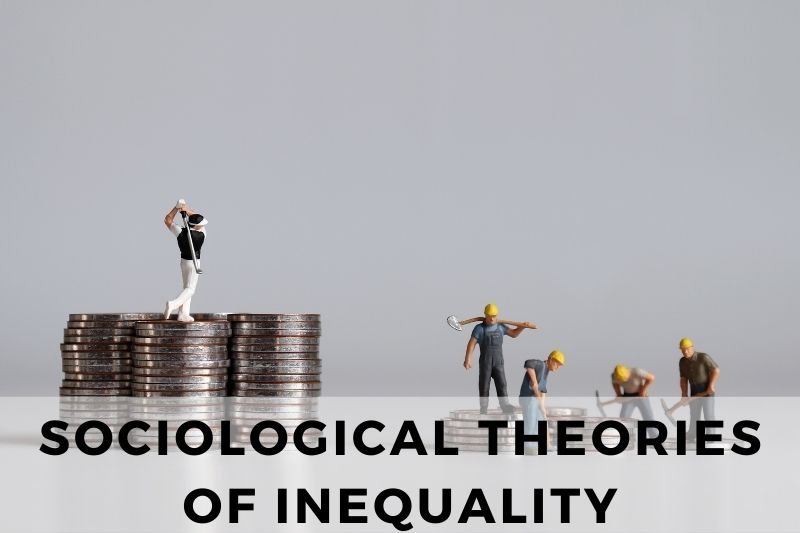
What causes inequality in society? Is it built into the structure, or is it shaped by the actions of individuals? Sociologists have developed various theories to explain why some people have more power, wealth, or status than others. These theories explore the different factors that contribute to social inequality, from class and race to gender and culture.
Understanding these theories helps us identify the root causes of inequality and how it can be addressed. In this article, we will examine the major sociological theories of inequality and their perspectives on how disparities arise and persist in society.
Major Sociological Theories of Inequality
#1. Structural Functionalism
Structural functionalism views inequality as a necessary component of society. According to this theory, social structures, such as the economy and educational systems, function to maintain stability and order. Inequality exists because it plays a role in motivating people to fulfill different social roles. Higher-paying jobs, for example, require specific skills and education, which only some individuals are able to obtain. As a result, people are distributed in a hierarchy based on their abilities and contributions to society. The theory argues that this hierarchy ensures that society functions efficiently by rewarding those who perform more essential tasks.
However, critics of structural functionalism argue that it overlooks the negative effects of inequality. They suggest that it justifies unequal distribution of resources by claiming it is beneficial for society. This perspective fails to account for the fact that some people have fewer opportunities to improve their social standing, leaving them stuck in low-paying, low-status jobs. By emphasizing the stability of the system, it neglects the ways in which inequality can perpetuate social divisions and limit upward mobility.
#2. Conflict Theory
Conflict theory, rooted in the works of Karl Marx, sees inequality as the result of exploitation. According to this theory, society is made up of competing groups, primarily the bourgeoisie (capitalists) and the proletariat (working class). The wealthy elite control the means of production and exploit the labor of the working class to maintain their dominance. Inequality exists because the powerful use their resources to maintain their position, often through mechanisms like wage suppression, privatization of resources, and political influence. This theory suggests that inequality is not a natural outcome but a deliberate product of capitalist systems.
Critics argue that conflict theory focuses too heavily on class divisions, neglecting other factors such as race, gender, and culture. While class is a significant aspect of inequality, it is not the only factor that shapes power dynamics. Furthermore, some argue that conflict theory’s focus on revolution overlooks other potential solutions to inequality, such as reform and policy change. Despite these critiques, conflict theory remains a powerful framework for understanding how inequality is maintained through power struggles and exploitation.
#3. Weberian Theory of Stratification
Max Weber’s theory of stratification emphasizes the complexity of social inequality. Unlike Marx, who focused primarily on economic factors, Weber suggested that social stratification is based on three key dimensions: class, status, and power. Class refers to a person’s economic position, status to their social prestige, and power to their ability to influence others. These dimensions intersect to create a stratified social system where individuals are ranked according to their access to resources, social recognition, and political influence. Inequality results from disparities in these areas, not just wealth.
Weber’s approach provides a more nuanced understanding of inequality by acknowledging that people can be privileged in one area but disadvantaged in another. For example, someone might have high status but limited economic resources, or they might have wealth but lack social prestige. This multidimensional view highlights how people experience inequality in different ways. It also suggests that social mobility is influenced by more than just economic factors, challenging the idea that economic power alone determines one’s position in society.
#4. Symbolic Interactionism
Symbolic interactionism focuses on the everyday interactions and symbols that contribute to social inequality. This theory emphasizes how individuals construct and negotiate social roles through their interactions with others. Inequality is seen as a product of the meanings and labels that society attaches to people based on their characteristics, such as race, gender, and social class. For instance, individuals from lower social classes may be labeled as “unskilled” or “lazy,” reinforcing negative stereotypes that contribute to their marginalization. These labels are then perpetuated through social interactions and institutional practices.
This perspective highlights the subjective nature of inequality. Unlike structural theories, which focus on large-scale societal systems, symbolic interactionism examines the micro-level interactions that create and reinforce social hierarchies. It suggests that inequality is not just the result of broad economic forces or political power but also arises from the daily practices that shape people’s identities. For example, students from wealthier families may receive more positive reinforcement in school, which can influence their academic success and future opportunities. Thus, symbolic interactionism underscores the role of perception and socialization in perpetuating inequality.
#5. Feminist Theory
Feminist theory examines inequality through the lens of gender, highlighting how women and other marginalized gender groups experience systemic oppression. Feminists argue that patriarchy, a social system where men hold power and authority, is the primary source of gender inequality. This theory seeks to understand how social, cultural, and political structures privilege men while limiting the opportunities and rights of women. Feminist theorists also examine how race, class, and other factors intersect with gender to create complex, layered systems of oppression, often referred to as intersectionality.
Feminist theory challenges traditional gender roles and advocates for the dismantling of patriarchal systems that contribute to inequality. It has been instrumental in advancing gender equality in areas like education, employment, and reproductive rights. However, some critics argue that early feminist theory focused too heavily on the experiences of white, middle-class women, neglecting the diverse experiences of women from different racial and socioeconomic backgrounds. Modern feminist theory has sought to address these concerns by incorporating a more intersectional approach to understanding gender inequality.
#6. Critical Race Theory
Critical race theory (CRT) explores the ways in which race and racism intersect with other forms of social inequality. It argues that racism is not just an individual attitude or action, but a structural and systemic issue embedded in society’s institutions. According to CRT, laws, policies, and cultural practices are often designed in ways that disproportionately disadvantage people of color. This theory emphasizes that race is a social construct that impacts people’s opportunities, social mobility, and treatment by others. It seeks to challenge and deconstruct these systems of racial injustice.
Critical race theorists also examine how race intersects with other factors such as class, gender, and sexuality, leading to complex systems of inequality. For instance, a Black woman may face both racial and gender discrimination that a white woman or Black man might not experience in the same way. CRT challenges traditional legal and political frameworks, urging the use of activism, storytelling, and marginalized voices to bring about social change. By highlighting the ongoing impact of racism, it aims to promote racial justice and equality.
#7. Social Capital Theory
Social capital theory focuses on the role of networks, relationships, and social connections in influencing inequality. This theory argues that people’s social networks provide them with valuable resources, such as access to information, job opportunities, and support during times of need. Those with extensive social networks—such as individuals from higher social classes—are often better positioned to access these resources, while those with fewer connections face greater barriers. Social capital is thus an important determinant of social mobility and life outcomes.
Critics of social capital theory argue that it can overlook how unequal access to social networks itself reinforces inequality. For example, individuals from marginalized backgrounds may lack the social connections that could help them climb the social ladder. Moreover, social capital can also be used to perpetuate privilege, as those in power may form exclusive networks that maintain their dominant status. While social capital offers a valuable lens for understanding inequality, it also highlights how even informal social systems can contribute to the unequal distribution of resources.
#8. Postcolonial Theory
Postcolonial theory examines how historical processes of colonization continue to shape contemporary social inequality. This theory argues that the legacy of colonialism has created enduring power imbalances between the global North (developed countries) and the global South (developing countries). Colonized nations were stripped of resources, and their peoples were often subjugated, creating long-lasting economic and social disparities. Postcolonial theory examines how these inequalities persist through mechanisms such as global trade, cultural imperialism, and ongoing economic exploitation.
This theory also emphasizes the importance of identity and culture in understanding inequality. Colonial powers imposed their values, norms, and beliefs on colonized peoples, creating cultural hierarchies that still influence social relations today. Postcolonial theorists highlight the need to decolonize knowledge and recognize the contributions of non-Western cultures. By focusing on the ongoing effects of colonialism, postcolonial theory seeks to address both material and symbolic forms of inequality, pushing for a more equitable global society.
#9. World Systems Theory
World systems theory, developed by sociologist Immanuel Wallerstein, analyzes global inequality through a lens of economic and political systems. The theory divides the world into core, semi-peripheral, and peripheral nations. Core nations are wealthy and powerful, controlling global trade and economic resources, while peripheral nations are poorer and often exploited for labor and resources. Semi-peripheral nations fall in between, having some economic power but still being dependent on core nations. According to world systems theory, inequality arises from this global division of labor, which keeps wealth and power concentrated in core nations.
Critics of world systems theory argue that it oversimplifies the complexities of global inequality, as it doesn’t fully account for the internal factors that contribute to poverty and inequality within nations. Furthermore, it can overlook the role of local political and economic systems in shaping inequality. However, the theory remains important for understanding the structural dynamics of global inequality, especially in terms of how economic exploitation across nations is intertwined with global power relations. It emphasizes the need for global change to reduce disparities between the core and peripheral nations.
Closing Thoughts
Sociological theories of inequality provide valuable frameworks for understanding how social disparities are created and maintained. Each theory offers unique insights into the structures, systems, and processes that perpetuate inequality, from economic exploitation to cultural and racial discrimination.
While no single theory provides a complete explanation, together they highlight the complexity of social inequality and the need for multifaceted solutions. By studying these theories, we can better understand the root causes of inequality and work toward creating a more just and equitable society. Addressing inequality requires both systemic change and a commitment to individual and collective action.