
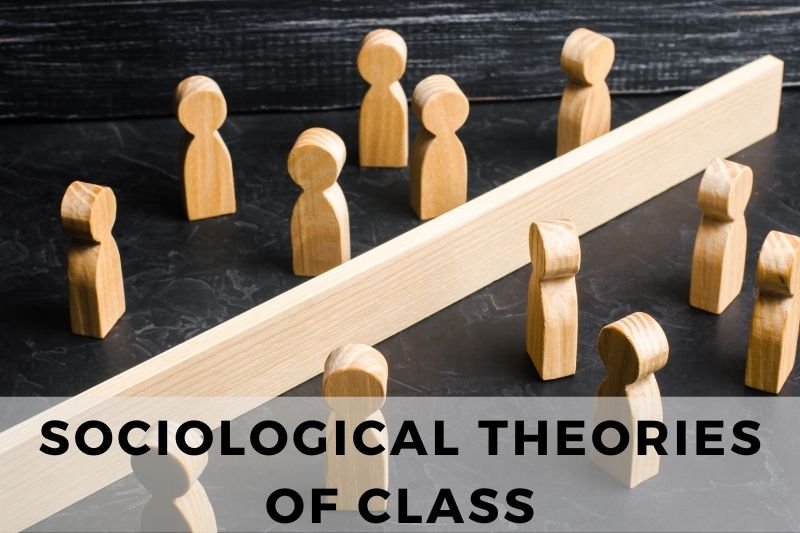
Why do social classes exist, and what keeps them in place? Sociologists have studied class divisions for centuries, uncovering the forces that shape inequality. From economic systems to cultural values, multiple factors influence social hierarchies. Some theories explain class struggle as a source of conflict, while others see it as necessary for stability.
Thinkers like Karl Marx and Max Weber have provided key insights into how power and resources are distributed. Understanding these theories helps explain social mobility, privilege, and systemic barriers. This article explores major sociological perspectives on class division and struggle, shedding light on their relevance today.
Historical Context
Theories of class have evolved over time, shaped by changes in economic systems, politics, and society. Early thinkers laid the groundwork for understanding class divisions, while later theorists refined and expanded these ideas. The historical development of class theories helps us understand the roots of current social structures and how they continue to affect people today.
Evolution Of Class Theories
- The study of class division started in the 19th century, influenced by the Industrial Revolution. During this time, the rise of capitalism created clear divisions between the working class and the owners of production. Early theorists like Karl Marx argued that class conflict was the driving force of social change and economic development.
- In the 20th century, scholars began to view class more as a set of social relations than a strict division based on ownership. Max Weber, for example, expanded the concept of class to include social status and power, not just economic position. This shift allowed for a more nuanced understanding of social inequality.
- More recent theories focus on issues like globalization, technology, and culture in shaping class divisions. These theories argue that class is not only determined by wealth or occupation but also by access to education, networks, and cultural capital.
Key Thinkers In Class Sociology
- Karl Marx is one of the most influential figures in the study of class. His theory of class struggle centers on the conflict between the bourgeoisie (owners) and the proletariat (workers). Marx believed that this conflict would eventually lead to a revolutionary change in society.
- Max Weber’s approach to class is broader than Marx’s. He argued that class status is determined by three factors: economic position, social status, and political power. For Weber, class is a multidimensional concept that accounts for more than just wealth and ownership.
- Pierre Bourdieu contributed significantly to our understanding of social class through his theory of cultural capital. He argued that access to education, cultural knowledge, and social networks also play crucial roles in maintaining class divisions. Bourdieu’s ideas have influenced contemporary discussions on social inequality and education.
Major Sociological Theories of Class
#1. Conflict Theory
Conflict theory, rooted in the works of Karl Marx, emphasizes the role of economic inequality and power struggles in shaping class divisions. It argues that society is divided into groups with conflicting interests, particularly the ruling class (bourgeoisie) and the working class (proletariat). Marx’s analysis of capitalism focused on how the owners of production exploit workers for profit, leading to class struggles that can drive social change.
For example, during the Industrial Revolution, factory owners accumulated wealth by paying workers low wages, while workers lived in poor conditions. This unequal distribution of resources fosters resentment and ultimately sparks efforts for societal change. Conflict theory suggests that class conflict is inevitable under capitalist systems, as the interests of the wealthy and the working class will always clash.
#2. Structural Functionalism
Structural functionalism views society as a complex system with interdependent parts, each contributing to stability and functioning. According to this perspective, class divisions exist because they serve a purpose in maintaining social order. Functionalists argue that different social classes contribute to the smooth functioning of society by filling different roles, such as laborers, managers, and leaders.
For instance, a functionalist might argue that the stratification of society helps allocate individuals to roles where they can be most productive. Higher-paying, more prestigious jobs require more education and training, which justifies the different levels of compensation. While it recognizes inequality, structural functionalism suggests that class divisions are necessary for societal cohesion and economic efficiency, ensuring that all roles are filled appropriately.
#3. Symbolic Interactionism
Symbolic interactionism focuses on how individuals interact with each other based on symbols, language, and shared meanings. When applied to class, it examines how people perceive and define themselves and others in terms of their social status. This theory suggests that class distinctions are created and maintained through everyday interactions and the meanings attached to them.
For example, a person from a wealthy background may exhibit certain behaviors, such as an accent or fashion choices, that signal their class status. Others may interpret these signals as signs of superiority. These social cues shape people’s self-identity and interactions with others, reinforcing class divisions. Symbolic interactionism highlights that class is not just about material wealth but also the way people present and interpret themselves within society.
#4. Social Stratification Theory
Social stratification theory explains how societies organize people into hierarchical layers based on factors such as wealth, education, and occupation. This theory emphasizes the role of social institutions in maintaining class divisions, where people’s position in the social hierarchy affects their access to resources and opportunities. Stratification can be both visible and subtle, with certain groups being marginalized or excluded from power.
An example of this can be seen in the difference in opportunities between children from wealthy families and those from lower-income backgrounds. Wealthier families can afford private education, giving their children access to higher social circles and better job prospects. Meanwhile, those from lower-income families often face barriers in education and career advancement, perpetuating their position in the lower strata of society.
#5. Marxist Theory
Marxist theory provides a critical view of capitalist societies, arguing that class divisions arise from the exploitation of the working class by the bourgeoisie. Marx believed that capitalism inherently creates inequality, as the bourgeoisie controls the means of production and profits from the labor of the proletariat. This leads to class struggle, which, according to Marx, would eventually lead to the overthrow of capitalism.
An example of Marxist theory in practice is the labor movement, where workers fought for better wages and working conditions. Marxists argue that workers are alienated from their labor because they do not own the products they produce. As long as capitalism exists, this exploitation will continue, but Marx believed that workers would eventually rise up and establish a classless society where wealth and power are shared equally.
#6. Weberian Theory
Max Weber’s theory of class goes beyond economic factors to include social status and power. Unlike Marx, who focused solely on the economic dimensions of class, Weber argued that class position is determined by three factors: wealth (economic position), prestige (social status), and power (political influence). For Weber, a person’s class is shaped by their access to these resources, which can differ from one individual to another, even within the same economic class.
For example, a highly skilled worker may have significant wealth but little social prestige, while an influential politician may possess power and prestige but not much wealth. Weber’s framework allows for a more nuanced view of social stratification, recognizing that class is not purely about economic factors but also about how individuals are perceived and what influence they hold in society. This adds complexity to understanding class in modern societies.
#7. Postmodern Theory
Postmodern theory challenges traditional concepts of class by questioning the grand narratives that have defined social structures. It emphasizes that identity and class divisions are fluid, fragmented, and socially constructed, shaped by language, culture, and media. Postmodernists argue that class is no longer as rigid as it once was, especially in post-industrial societies where information, culture, and technology play central roles in defining status.
For instance, in the digital age, a person’s social standing may not depend on traditional factors like wealth or occupation, but on their online presence, influence, or cultural capital. Celebrities and influencers from humble beginnings can now gain immense wealth and status through social media, showing that class mobility and identity are more complex. Postmodern theory suggests that class is an evolving and dynamic concept, influenced by shifting cultural and technological trends.
#8. Cultural Capital Theory
Cultural capital theory, developed by Pierre Bourdieu, argues that people’s cultural knowledge, skills, and education play a critical role in maintaining social class divisions. Cultural capital refers to the non-economic resources people use to gain social mobility, including educational credentials, social skills, and cultural knowledge. Bourdieu suggested that those with access to high cultural capital—often the wealthy—are better equipped to navigate social structures and maintain their advantages.
For example, individuals from affluent families typically have access to better education, which equips them with the cultural capital to succeed in professional environments. In contrast, individuals from lower-income backgrounds may lack the cultural capital needed to excel in such settings, perpetuating their social and economic disadvantage. Cultural capital theory highlights the importance of intangible resources in maintaining social stratification, emphasizing that access to knowledge and cultural norms can be as crucial as economic resources in determining one’s place in society.
#9. Social Mobility Theory
Social mobility theory explores the movement of individuals or groups within the social hierarchy, focusing on the ability to move up or down in social classes. The theory highlights that while some societies allow for significant social mobility, others have more rigid class structures that limit opportunities for advancement. Factors like education, occupation, and family background influence how easily individuals can change their class position.
For example, in societies with high social mobility, a child from a working-class family might attend a prestigious university and eventually become a business leader, moving upward in social class. In contrast, societies with lower social mobility might see less movement, with individuals’ class positions largely determined by their family background and social networks. Social mobility theory helps explain why some people can escape poverty while others remain stuck in lower classes despite their efforts.
#10. Elite Theory
Elite theory posits that societies are controlled by a small, powerful elite who hold the majority of wealth, power, and influence. According to this theory, class divisions are maintained by the elite, who use their position to shape laws, institutions, and policies in their favor. This concentration of power prevents meaningful change and reinforces the existing social hierarchy, limiting the potential for broader social mobility.
For example, the political and economic elite often use their resources to influence elections, shape policy decisions, and control media narratives. This enables them to preserve their status and wealth, keeping power concentrated within a small group. Elite theory argues that, while class divisions may appear to be fluid, they are often entrenched by the actions of the elite, who actively work to maintain their dominance and limit the power of lower social classes.
Closing Thoughts
Understanding sociological theories of class division and struggle provides valuable insights into the structure of society. From Marx’s focus on economic exploitation to Weber’s broader approach incorporating power and prestige, these theories explain the persistence of class disparities.
While theories like postmodernism and cultural capital offer more complex views of class, they still highlight the deep-rooted inequalities that shape social dynamics. Recognizing these theories helps us better understand how class influences opportunities, mobility, and societal development, emphasizing the need for ongoing discussions on reducing inequality and fostering greater social justice.