
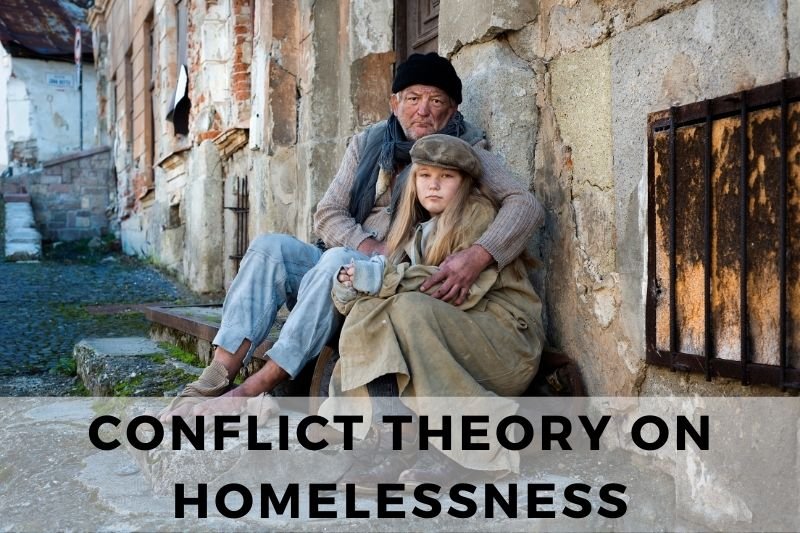
What causes homelessness? Is it merely a result of personal failure, or does it reflect deeper societal issues? Conflict theory offers a lens to understand homelessness as a product of systemic inequality and power imbalances. This perspective suggests that economic disparity, class struggle, and societal structures play a significant role in shaping the experiences of the homeless. By examining homelessness through the lens of conflict theory, we can gain insights into the broader social forces at play and understand why certain groups are disproportionately affected.
Introduction to Conflict Theory
Definition of Conflict Theory
Conflict theory, originally developed by Karl Marx, asserts that society is marked by inequality and ongoing conflict between different social groups. According to this perspective, social structures and systems are shaped by the competition for power, resources, and control. Conflict arises because those in power seek to maintain their dominance, often exploiting and marginalizing subordinate groups. While Marx’s focus was primarily on class conflict, conflict theory has since been expanded to include other forms of social division such as race, gender, and ethnicity. This framework helps explain the systemic nature of inequality, showing that social conflicts are not isolated incidents but part of a larger societal pattern.
Key Theorists and Concepts
Conflict theory has been developed by several scholars, each contributing to its broader understanding. Their work highlights the role of power and resource struggles in shaping society.
- Karl Marx: The founder of conflict theory, Marx argued that the core of societal conflict lies in class struggle. He proposed that the working class (proletariat) is exploited by the ruling class (bourgeoisie), resulting in unequal distribution of resources. Marx believed this exploitation led to inherent class conflict, which could only be resolved through a revolution that would overthrow capitalist systems.
- Max Weber: Weber, influenced by Marx, broadened conflict theory by incorporating the concepts of “status” and “power,” beyond just economic factors. He argued that social conflict stems not only from economic disparities but also from differences in social prestige, education, and authority. This helped explain why some groups, despite not being economically disadvantaged, still experienced significant inequality and conflict.
- Ralf Dahrendorf: Dahrendorf extended conflict theory into the analysis of institutional dynamics. He emphasized that conflict within and between social institutions, such as businesses and government, plays a key role in shaping social inequality. Dahrendorf argued that authority within institutions, along with the conflicts between those who hold power and those who do not, is central to understanding the perpetuation of social divisions.
These theorists have laid the foundation for analyzing how social structures create and maintain inequality. Their ideas remain essential for understanding systemic issues such as homelessness and the broader forces that drive it.
Application of Conflict Theory to Homelessness
Class Struggle and Economic Inequality
Conflict theory explains homelessness through the lens of class struggle and economic inequality. The most significant factor contributing to homelessness is the economic system that prioritizes profit over the well-being of individuals. In capitalist societies, wealth is concentrated in the hands of a few, while the working class, or those without stable employment, face poverty and lack access to essential resources such as housing. The disparity between the wealthy and the poor often leads to exclusion from economic systems, leaving the most vulnerable members of society without a place to live.
Homelessness, in this sense, is not just a result of individual choices or personal failure but a reflection of a broken system that marginalizes certain groups. The working poor, individuals who are unemployed, and those from disenfranchised communities are more likely to experience homelessness. The limited access to affordable housing, healthcare, and education further perpetuates this inequality. As a result, conflict theory highlights the systemic barriers that contribute to homelessness, rather than placing the blame on the individuals who experience it.
Power Dynamics in Society
Conflict theory also focuses on the power dynamics that shape homelessness. Power, in this context, refers to the ability of certain groups, such as the wealthy and those in political power, to control resources, policies, and institutions. These groups set the terms for how society operates, often overlooking or dismissing the needs of marginalized populations. The wealthy, for example, are able to influence housing policies that prioritize luxury developments over affordable housing, leading to further displacement of the poor.
Power dynamics are also evident in the criminalization of homelessness. In many cities, laws are enacted that make it illegal to sleep in public spaces or panhandle. These laws disproportionately affect homeless people, making it harder for them to survive and, in some cases, leading to their arrest. This reflects a broader societal tendency to view homelessness as a personal failing rather than a result of systemic inequality. Power structures contribute to the cycle of homelessness by making it harder for individuals to escape their situation.
Role of Institutions and Policies
Homelessness is heavily influenced by institutional structures and policies that perpetuate inequality. Institutions like the government, the housing market, and the criminal justice system play significant roles in either alleviating or worsening homelessness.
- Government Policies: Government programs that provide assistance to the homeless, such as housing vouchers or social welfare programs, are often underfunded or difficult to access. Inadequate support makes it challenging for individuals to transition out of homelessness, while the lack of affordable housing policies exacerbates the issue.
- Housing Market: The housing market, driven by profit motives, often prioritizes high-end developments over affordable housing. Gentrification and the rise in property values push low-income individuals further into poverty and homelessness, while developers and landlords profit from the displacement.
- Criminal Justice System: The criminalization of homelessness, through laws that prohibit sleeping in public or loitering, leads to further marginalization. The legal system often treats homelessness as a criminal issue rather than a social problem, resulting in individuals being incarcerated rather than provided with the help they need.
These institutions create a system that makes it more difficult for homeless individuals to gain stability and re-enter society, perpetuating the cycle of poverty and marginalization.
Case Studies
Urban Homelessness
Urban homelessness is a critical issue in major cities around the world, particularly in places like Los Angeles, New York, and San Francisco. These cities experience rapid economic growth and attract wealthier populations, resulting in a significant increase in housing costs. With the demand for housing outpacing the supply of affordable options, many low-income individuals and families are pushed out of the rental market. In cities like San Francisco, where the average rent for a one-bedroom apartment exceeds $3,000, people earning minimum wage or on fixed incomes find themselves unable to afford basic housing. As rent prices rise, more individuals are forced to live on the streets or in temporary shelters, exacerbating the homelessness crisis.
In addition to high housing costs, urban homelessness is fueled by several other factors, such as unemployment, mental illness, and substance abuse. Studies show that a significant percentage of the homeless population in cities suffers from mental health issues or addictions. In urban centers like Los Angeles, nearly 30% of the homeless population is reported to have severe mental health disorders. The lack of adequate mental health care and addiction recovery programs makes it difficult for these individuals to reintegrate into society, thus perpetuating their homelessness. Urban areas also tend to have higher rates of crime and violence, which further compounds the challenges faced by homeless individuals. The concentration of homeless people in cities often leads to heightened visibility, creating a cycle where local governments enforce laws that criminalize homelessness, such as banning sleeping in public spaces or panhandling. These measures only worsen the situation, as they prevent people from finding safe places to sleep or access vital resources.
Rural Homelessness
Rural homelessness, although less visible, is an increasingly important issue in areas such as Appalachia, the rural Midwest, and parts of the southern United States. Unlike urban centers, rural areas typically offer fewer resources and support systems for those experiencing homelessness. These areas often lack shelters, affordable housing options, or community-based services, leaving those who are homeless with few options. In rural Appalachia, for example, the decline of coal mining and other local industries has led to economic downturns, leaving many families without stable income or housing. With fewer job opportunities, individuals may end up living in substandard conditions, such as dilapidated trailers, or even resort to living in the woods or abandoned buildings.
Additionally, rural homelessness is often compounded by other social issues like a lack of access to healthcare and education. For instance, people living in rural areas may face long distances to reach medical facilities, which can worsen physical and mental health issues that contribute to homelessness. A lack of mental health care facilities in these areas exacerbates the situation, as individuals with untreated mental health conditions may find it even harder to access stable housing or employment. Moreover, rural homelessness is often underreported, as people in these areas may be less likely to seek assistance due to the stigma associated with homelessness or the lack of visible shelters. Many rural homeless individuals are forced to live off the grid in abandoned farms or other isolated spaces, making it difficult for organizations and governments to track and provide for their needs. The rural nature of the issue leads to a lack of awareness and public support, making it a hidden crisis in many parts of the country.
Closing Thoughts
Conflict theory provides a valuable framework for understanding homelessness as a systemic issue rather than a personal failing. By examining the roles of economic inequality, power dynamics, and institutional policies, we can see how homelessness is deeply rooted in the structures of society. Whether in urban or rural settings, the lack of affordable housing, limited resources, and inadequate social support systems create barriers for those trying to escape homelessness. Addressing these issues requires comprehensive policy changes and a shift in societal attitudes towards the homeless, focusing on systemic solutions rather than criminalization or marginalization.