
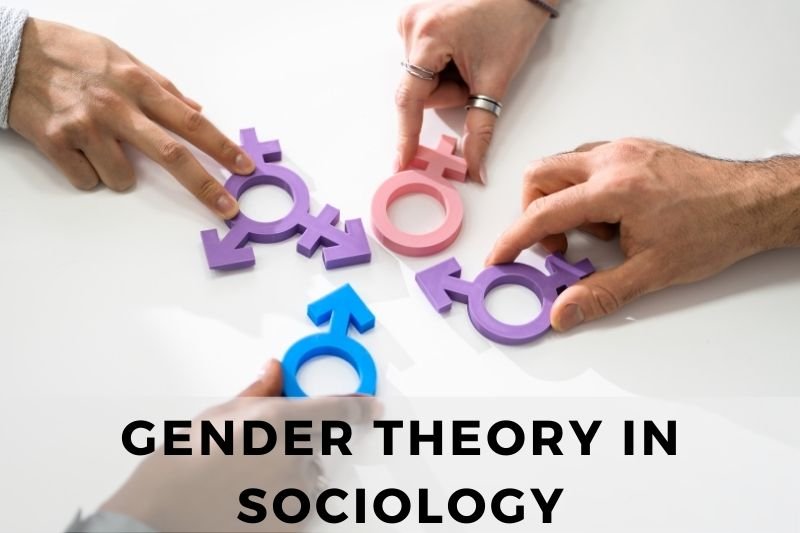
How do society and culture shape our understanding of gender? Gender theory in sociology examines how gender is constructed, performed, and maintained within social systems. It explores how cultural norms, expectations, and power structures influence gender roles. This theory looks beyond biological differences, focusing on how gender identities are formed through socialization. By studying gender theory, we gain insight into how individuals and groups navigate societal expectations and inequalities. Understanding these dynamics is crucial for addressing issues such as inequality, discrimination, and social change.
Core Concepts of the Gender Theory in Sociology
#1. Social Construction Of Gender
The social construction of gender argues that gender is not biologically determined but created through social interactions and cultural norms. Society teaches individuals how to act based on their assigned gender, shaping behaviors, expectations, and identities. For example, boys may be encouraged to play with trucks, while girls are expected to engage in domestic activities. These learned behaviors are reinforced over time, establishing gender norms that dictate how individuals should behave. The concept suggests that gender is fluid and can vary across different cultures and historical periods, challenging traditional views that link gender directly to biological sex.
#2. Gender Roles And Expectations
Gender roles are societal expectations that dictate how individuals should behave based on their gender. These roles are often ingrained in early childhood and perpetuated through family, media, and education systems. For instance, men may be expected to be providers and protectors, while women are often assigned nurturing or caregiving roles. These roles create a framework for behavior that can limit personal expression and reinforce inequality. As society evolves, these roles have been challenged, with movements advocating for equal participation in traditionally gendered activities, such as women in the workforce or men in caregiving roles.
#3. Intersectionality
Intersectionality is the concept that an individual’s experiences with gender are influenced by other aspects of their identity, such as race, class, sexuality, and ability. This framework helps explain why gender inequality can manifest differently for people depending on their multiple social identities. For example, a Black woman may face distinct challenges that differ from those of a white woman or Black man due to the overlap of racism and sexism. Intersectionality encourages a more nuanced understanding of gender, highlighting that gender oppression cannot be fully understood in isolation but must be analyzed in connection with other systems of power and identity.
#4. Patriarchy And Power Dynamics
Patriarchy refers to a social system in which men hold primary power and dominate in roles of leadership, moral authority, and control of property. This system has historically structured societies, creating a gender hierarchy where men benefit from greater social, political, and economic power. Gender theory examines how patriarchy maintains gender inequalities by shaping societal norms and expectations. For example, the gender pay gap persists due to patriarchal structures that devalue women’s labor while reinforcing male authority. Understanding patriarchy is essential in challenging these power imbalances and promoting equality in various social systems.
#5. Gender Identity And Expression
Gender identity refers to an individual’s internal sense of being male, female, both, neither, or somewhere in between, while gender expression is how a person presents their gender to the outside world through clothing, behavior, and mannerisms. Gender identity may not align with societal expectations based on biological sex, as seen in transgender or non-binary individuals. Society often pressures people to conform to traditional gender expressions, but gender theory promotes the idea that gender is a personal, fluid experience that should not be restricted by societal norms. This perspective advocates for greater acceptance of diverse gender identities and expressions.
#6. Feminist Theory
Feminist theory in sociology focuses on understanding and challenging gender inequalities, particularly the social, political, and economic oppression of women. It critiques how patriarchal systems have historically subordinated women and aims to transform gender dynamics for greater equality. Feminist scholars emphasize the importance of women’s experiences and perspectives, arguing that these have been marginalized or excluded in traditional sociological research. Feminist theory has also expanded to include diverse perspectives, such as women of color and queer women, highlighting the intersectional nature of gender-based oppression and the need for more inclusive frameworks for social justice.
#7. Masculinity Studies
Masculinity studies examines how societal expectations of men and masculinity are constructed and how these influence men’s behavior, experiences, and societal roles. The theory challenges traditional notions of masculinity that emphasize dominance, emotional restraint, and physical strength, arguing that such ideals can harm both men and society. For example, men are often socialized to suppress emotions like vulnerability or sadness, which can lead to mental health issues. Masculinity studies also explore the concept of “hegemonic masculinity,” which refers to the dominant form of masculinity that marginalizes other expressions of masculinity, such as those seen in LGBTQ+ communities.
#8. Queer Theory
Queer theory challenges conventional understandings of sexuality and gender, rejecting binary categories such as male/female and heterosexual/homosexual. It argues that sexual and gender identities are not fixed but socially constructed and fluid. Queer theory critiques the ways in which heteronormativity, or the assumption that heterosexuality is the default or normal sexual orientation, marginalizes non-heterosexual individuals. It advocates for the acceptance of diverse sexual identities and practices, asserting that everyone should have the freedom to define their own gender and sexuality without societal constraints or discrimination.
#9. Gendered Division Of Labor
The gendered division of labor refers to the way certain jobs and tasks are designated as appropriate for one gender over another. Historically, this division has led to men performing work outside the home, such as in business or politics, while women were expected to handle domestic duties. This division reinforces gender inequalities, as women’s unpaid labor in the home is often undervalued compared to men’s paid labor. Gender theory highlights how this division is socially constructed and advocates for a more equitable distribution of labor, challenging the norms that confine individuals to specific roles based on gender.
#10. Gender And Socialization
Socialization is the process by which individuals learn and internalize the values, norms, and behaviors of their culture, including gender roles. From a young age, children are taught how to behave according to their gender through interactions with parents, peers, and teachers, as well as through media representations. For example, boys might be encouraged to play sports, while girls might be steered toward caregiving roles. Gender theory examines how this process shapes gender identity and reinforces societal expectations. By understanding the impact of socialization, gender theory offers insight into how gender norms are perpetuated and how they can be challenged.
Applications Of Gender Theory In Sociology
Analyzing Social Institutions
Gender theory is often used to analyze social institutions, such as the family, education, and the workplace. These institutions play a significant role in shaping individuals’ gender identities and reinforcing gender roles. For example, in educational settings, textbooks and teaching materials often depict stereotypical gender roles, such as men in leadership positions and women in nurturing roles. This reinforces the idea that certain behaviors or careers are inherently suited to one gender. Gender theory helps to critique these patterns, revealing how institutions perpetuate inequalities and provide a framework for challenging traditional structures that limit opportunities based on gender.
Moreover, analyzing the workplace through the lens of gender theory helps to uncover the gender pay gap, unequal access to leadership roles, and workplace harassment. Gender norms can also dictate the types of roles women and men are expected to perform. For instance, women are often expected to take on more support or caregiving roles, while men are expected to be leaders or decision-makers. Understanding how social institutions uphold these gender norms can lead to changes in policy, advocating for greater equality and more inclusive practices in these essential areas of society.
Understanding Gender Roles
Gender theory provides valuable insights into how gender roles are constructed and maintained within society. These roles often dictate how individuals should behave based on their gender and can limit personal expression. For example, men may be expected to act tough, avoid showing emotions, and refrain from activities that are considered “feminine,” like dancing or cooking. Women, on the other hand, may be expected to prioritize family and caregiving duties. These expectations are learned from an early age through socialization and reinforced through media, education, and family dynamics. Understanding the origins and impacts of these roles is key to challenging restrictive gender norms.
Additionally, gender roles can change over time as societal attitudes evolve. For instance, more women are pursuing careers in fields historically dominated by men, like engineering and politics. Men are also increasingly taking on caregiving roles, such as stay-at-home fathers or caregivers for elderly relatives. Gender theory helps to explain these shifts and highlights the fluidity of gender roles. By analyzing how roles are shaped and transformed, gender theory can help to create a more inclusive society where individuals are free to express themselves outside of traditional gender expectations.
Impact On Policy And Social Change
Gender theory has a significant impact on policy and social change, influencing laws and policies designed to address gender inequality. For example, gender theory has been pivotal in advocating for workplace equality, including the introduction of policies such as paid parental leave, anti-discrimination laws, and equal pay legislation. These changes aim to level the playing field for people of all genders, particularly women, who have historically been disadvantaged in professional and public spheres. Gender theory provides a critical framework for understanding how societal structures perpetuate inequality, giving policymakers the tools to design interventions that address these imbalances.
Gender theory also plays a role in shaping social movements that demand equality and justice for marginalized gender identities, such as the LGBTQ+ community. Movements advocating for gender rights often use gender theory to challenge societal assumptions about binary gender categories and call for more inclusive policies. This includes access to gender-neutral bathrooms, the right for individuals to self-identify, and legal recognition of non-binary genders. The application of gender theory in these areas has led to significant changes in laws and public attitudes, promoting a more inclusive and equitable society for all individuals, regardless of gender identity.
Limitations Of Gender Theory
#1. Oversimplification Of Gender Identities
One limitation of gender theory is that it can sometimes oversimplify gender identities, reducing them to binary categories of male and female. This approach fails to account for the complex and diverse experiences of individuals who do not fit neatly into these categories. Non-binary, genderfluid, and other gender identities are often overlooked, which can perpetuate the marginalization of those who do not conform to traditional gender norms. Recognizing and respecting the multiplicity of gender identities is essential to creating a more inclusive and accurate understanding of gender in both theory and practice.
#2. Neglect Of Intersectionality
Although gender theory emphasizes the social construction of gender, it can sometimes neglect the intersectional nature of identity. Gender does not exist in isolation; it intersects with race, class, sexuality, and other social categories, which shape individuals’ experiences differently. For example, a Black woman may face challenges that are distinct from those of a white woman or a Black man. The lack of intersectional analysis can result in a narrow understanding of gender that fails to account for the full range of experiences and inequalities faced by individuals with multiple marginalized identities.
#3. Focus On Binary Constructs
Gender theory, particularly in its early stages, often focused on binary constructs of male and female, which reinforced a limited understanding of gender. This binary perspective disregards the fluidity and spectrum of gender identities. While gender theory has evolved to include more diverse understandings, the continued emphasis on the male-female dichotomy can limit the scope of the theory. It can marginalize those who do not identify strictly as male or female, such as non-binary or genderqueer individuals, by forcing them into rigid categories that do not reflect their lived experiences.
#4. Limited Empirical Evidence
A notable limitation of gender theory is the lack of empirical evidence to support some of its claims. While many aspects of gender theory are informed by sociological research and observations, certain concepts, such as the complete social construction of gender, remain difficult to quantify or measure. Empirical studies often focus on specific aspects of gender, such as gender roles or workplace inequality, but may not fully capture the broader, more fluid aspects of gender identity and expression. As a result, some critiques argue that gender theory, while valuable, lacks sufficient data to validate some of its more abstract concepts.
#5. Cultural Relativity Issues
Gender theory often assumes that gender roles and identities are socially constructed in a similar manner across different cultures, which can lead to cultural relativism issues. This perspective fails to account for the diversity of gender norms and roles in various cultures worldwide. For example, many Indigenous cultures recognize more than two genders, such as the “Two-Spirit” identity in some Native American tribes. Applying a Western-centric model of gender theory across different cultures can overlook these unique understandings of gender, leading to an incomplete and potentially inaccurate analysis of gender systems globally.
#6. Resistance To Change
Gender theory faces resistance in some contexts, particularly from those who uphold traditional views of gender. In societies where rigid gender norms are deeply ingrained, challenges to these norms can be met with opposition. Critics argue that gender theory undermines societal stability by questioning long-standing structures. This resistance can make it difficult to apply gender theory in practical ways, such as in policy reform or education. Despite growing acceptance, efforts to challenge established gender norms may continue to face barriers from institutions or individuals resistant to change.
#7. Misinterpretation Of Gender Roles
One criticism of gender theory is that it can sometimes lead to a misinterpretation or oversimplification of gender roles. While gender theory highlights the socially constructed nature of these roles, it may fail to recognize the complexities and variations in how these roles are experienced by individuals. For example, a man who adheres to traditional masculine roles might still face challenges that are not solely determined by gender, such as mental health struggles or societal pressures. Misinterpreting these experiences through a purely gendered lens can overlook other contributing factors and lead to incomplete or misleading conclusions.
#8. Overemphasis On Social Constructs
While gender theory emphasizes the social construction of gender, some critics argue that it overemphasizes social influences at the expense of biological factors. By focusing heavily on the role of society in shaping gender identities, gender theory can sometimes neglect the ways in which biology might influence gendered behaviors. For instance, research in evolutionary psychology suggests that some gender differences may have biological underpinnings. A balanced approach, integrating both social and biological perspectives, may offer a more comprehensive understanding of gender that accounts for both innate and socially constructed elements.
#9. Lack Of Inclusivity
Despite its progressive goals, gender theory can sometimes be criticized for its lack of inclusivity. Historically, gender theory has focused primarily on the experiences of cisgender women and men, leaving out the voices and experiences of transgender, non-binary, and gender-nonconforming individuals. This exclusion perpetuates the marginalization of these groups within both the academic field and wider society. As the field of gender theory evolves, it is crucial that it becomes more inclusive, embracing a broader range of experiences and identities to ensure a more holistic understanding of gender.
#10. Potential For Dogmatism
As gender theory becomes more widely accepted, there is a risk that it could become dogmatic. In some cases, the theoretical framework might be applied in rigid ways that do not account for the evolving nature of gender or individual experiences. This dogmatism could limit the flexibility of gender theory and prevent the exploration of alternative perspectives. By encouraging more open, flexible discussions and critical evaluations of gender, the theory can remain a dynamic tool for understanding gender in all its complexity rather than becoming a rigid set of beliefs.
Closing Thoughts
Gender theory in sociology provides valuable insights into the social construction of gender, its impact on individuals, and its role in shaping societal structures. However, its limitations, such as oversimplification and cultural relativity issues, must be considered for a more comprehensive understanding. As society continues to evolve, gender theory must adapt, embracing a broader range of gender identities and intersectional experiences. By acknowledging its shortcomings and expanding its scope, gender theory can continue to serve as a powerful tool for challenging inequality and fostering inclusivity, ultimately contributing to a more equitable and understanding society.