
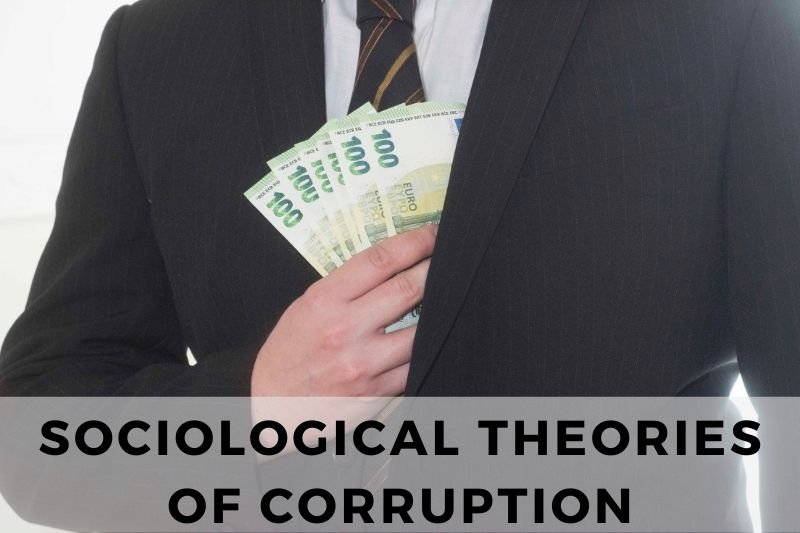
Why does corruption persist in societies despite efforts to eliminate it? Sociologists have long studied corruption to understand its causes and effects. Different theories explain corruption from various angles, including power struggles, cultural norms, and institutional weaknesses. Some theories see corruption as a breakdown of social structures, while others view it as a tool for maintaining power.
Understanding these perspectives helps policymakers and researchers develop strategies to combat corruption effectively. This article explores key sociological theories of corruption, highlighting their insights and implications.
Historical Context
The study of corruption has evolved over time, with early theories focusing primarily on individual moral failings or psychological factors. Over the years, sociological perspectives have shifted towards broader social, political, and economic factors. Key milestones in sociological research have provided a more comprehensive understanding of corruption as a systemic issue.
Evolution of Corruption Theories
- Early Theories (Pre-20th Century): Early corruption theories mainly focused on individual behavior, portraying corrupt individuals as morally flawed. The “rotten apple” model suggested that corrupt individuals were outliers, not part of a larger system. Over time, scholars began to recognize that corruption often arises within social and institutional structures, not just from individual actions.
- Mid-20th Century Shift (1940s–1960s): In the 20th century, corruption theories expanded to include the impact of social and political environments. Scholars started focusing on how power imbalances, lack of accountability, and political instability contributed to corrupt practices. This shift laid the foundation for modern sociological theories that view corruption as a systemic issue.
- Contemporary Perspectives (1970s–Present): Today, corruption is studied through a variety of lenses, recognizing it as a multifaceted problem involving social, political, and economic dimensions. The evolution of these theories marks the transition from blaming individuals to understanding corruption as a broader societal issue that requires collective action.
Key Milestones in Sociological Research
- Max Weber’s Bureaucracy Theory (1900s): One of the first significant milestones in sociological research was the work of Max Weber, who explored the role of bureaucracy in fostering corruption. Weber argued that bureaucratic systems, while efficient, could also lead to a concentration of power and potential for corruption. This insight contributed to the development of later theories that link institutional structures with corrupt behavior.
- Wilson and Klitgaard’s Models (1960s–1980s): In the 1960s and 1970s, scholars like James Q. Wilson and Robert Klitgaard contributed to a broader understanding of corruption by linking it to governance and economic systems. They introduced models showing how corruption thrives in systems where opportunities for illicit gain are coupled with weak enforcement of laws. These models helped frame corruption as a systemic problem that could be analyzed through economic and political factors.
- Global Focus on Corruption (1980s–1990s): The 1980s and 1990s saw the rise of corruption as a major focus in the field of international development. Researchers began to examine the relationship between corruption and economic development, finding that corruption often undermines growth by discouraging investment and distorting public services. This research led to the development of anti-corruption strategies aimed at improving governance and transparency in both developing and developed countries.
Major Sociological Theories of Corruption
#1. Structural Functionalism
Structural functionalism views corruption as a result of dysfunction within society’s structures. It suggests that when a society’s institutions fail to perform their functions effectively, corruption can emerge as a coping mechanism. This theory emphasizes the role of institutions, such as government and the legal system, in maintaining social order. When these systems are unable to fulfill their responsibilities, individuals may turn to corrupt practices to navigate a dysfunctional environment. For example, in states with weak judicial systems, corruption may arise as people seek justice through illegal means, such as bribery or political influence.
According to functionalists, corruption also serves a purpose in society by maintaining balance in unstable systems. In some cases, corrupt actions might be seen as a way of managing inefficiency or disorder within a larger social structure. For example, in bureaucratic systems, employees may resort to bribery or other illicit means to bypass slow-moving administrative processes. In this sense, structural functionalism doesn’t always view corruption as inherently negative but as a symptom of institutional failure that needs addressing to restore stability and functionality within the system.
#2. Conflict Theory
Conflict theory, rooted in Marxist thought, sees corruption as a tool for maintaining power and control within a society. It argues that the powerful use corruption to sustain their dominance over less privileged groups. In this view, corruption is not a random occurrence but a deliberate strategy by elites to exploit resources and manipulate laws in their favor. For instance, politicians and business leaders may engage in bribery or vote-buying to secure positions of power and ensure the continuation of their wealth and influence. By manipulating the system, they suppress opposition and maintain an unequal distribution of resources.
Moreover, conflict theorists argue that corruption is often a product of social inequality. When individuals or groups feel disenfranchised or powerless, they may resort to corruption as a means of leveling the playing field. This is evident in situations where marginalized communities, facing systemic barriers, engage in corrupt practices as a form of resistance or survival. Conflict theory highlights the ways in which corruption perpetuates existing inequalities, undermining fairness and contributing to a cycle of exploitation and injustice.
#3. Symbolic Interactionism
Symbolic interactionism focuses on the social interactions and symbols that contribute to corruption. It emphasizes how corruption is learned and reinforced through everyday interactions within social groups. In this theory, individuals adopt corrupt practices not simply because of structural or economic pressures but because they have been socialized into such behavior. For example, in environments where bribery is common, individuals may come to see it as a normal or even necessary practice to get things done. These social norms and values shape an individual’s understanding of what is acceptable, leading to corruption being perpetuated across generations.
Furthermore, symbolic interactionism highlights the role of identity in shaping corrupt behavior. As individuals internalize the values and behaviors of their social groups, they form their sense of self based on these interactions. In some cases, individuals who engage in corruption may justify their actions by aligning them with group values or societal expectations. For instance, public officials may rationalize accepting bribes as a way to maintain loyalty to their political allies or as a response to perceived system-wide corruption. This perspective suggests that corruption is not only about economic or political incentives but also about socialization and identity formation.
#4. Rational Choice Theory
Rational choice theory suggests that individuals engage in corruption based on a calculated decision to maximize personal benefits while minimizing perceived risks or consequences. According to this theory, corrupt behavior occurs when the perceived rewards outweigh the potential costs, such as legal penalties or social stigma. For example, a government official may accept a bribe because they assess the likelihood of being caught as low, and the financial gain is significant. This theory assumes that individuals are rational actors who weigh the benefits and costs of their actions, making corruption a rational decision under certain conditions.
Rational choice theory also highlights the role of opportunity in fostering corruption. If there is a lack of monitoring, weak enforcement, or a high tolerance for corruption within a system, individuals may feel emboldened to act corruptly. This is particularly evident in countries where corruption is normalized, and people may believe that their peers or superiors are engaging in similar behavior. The theory suggests that improving oversight, reducing incentives for corruption, and increasing the costs of unethical actions could help deter corrupt behavior by shifting the cost-benefit analysis for individuals.
#5. Cultural Theory
Cultural theory posits that corruption is deeply rooted in the values, norms, and traditions of a particular society. It argues that corruption is not just a matter of individual choice or structural dysfunction but is shaped by the broader cultural context in which individuals live. In societies where corruption is culturally accepted or even seen as a necessity, individuals are more likely to engage in corrupt practices. For instance, in some cultures, gift-giving or patronage may be viewed as a social norm, even though it may lead to corrupt behavior when misused for personal gain.
This theory emphasizes the importance of cultural values in determining the prevalence and types of corruption. In some societies, informal networks and social obligations are central to the functioning of business and government, which can blur the lines between legitimate transactions and corrupt practices. The theory suggests that efforts to combat corruption must account for cultural norms and values to be effective. For example, what may be seen as bribery in one culture might be viewed as a customary practice in another. Cultural theory underscores the need for context-sensitive approaches to anti-corruption efforts, recognizing that the same behaviors may have different meanings and implications depending on the cultural setting.
#6. Institutional Theory
Institutional theory examines corruption as a product of the structure and functioning of formal organizations and institutions. It argues that corruption is often facilitated by weak institutions that lack transparency, accountability, and effective enforcement mechanisms. In this view, institutions such as the judiciary, law enforcement, and government agencies play a crucial role in either preventing or enabling corruption. When these institutions are weak or compromised, corrupt practices can thrive. For example, in countries with inefficient legal systems, individuals may resort to bribery or other illegal means to expedite legal processes or avoid punishment.
Furthermore, institutional theory highlights the importance of formal rules and regulations in shaping behavior. In systems where institutions fail to establish or enforce clear standards for behavior, corruption becomes more prevalent. Strong institutions with effective checks and balances, transparency, and accountability mechanisms are essential to preventing corruption. For example, countries with strong anti-corruption agencies, independent courts, and well-functioning civil services are less likely to experience widespread corruption, as these institutions provide the necessary oversight to deter corrupt practices.
#7. Social Capital Theory
Social capital theory focuses on the role of social networks, relationships, and trust in fostering or preventing corruption. It suggests that corruption can be influenced by the strength of social ties and the level of trust within a society. High levels of trust and cooperation within a community can reduce the need for corrupt behavior, as individuals rely on social norms and collective action to resolve issues. In contrast, in societies where trust is low and individuals are more focused on personal gain, corruption may thrive. For example, in tightly-knit communities where informal networks are strong, individuals may be more likely to engage in corrupt practices to protect their social standing or gain favor.
This theory also emphasizes the role of bridging social capital, or the connections between different social groups. Societies with weak bridging social capital may experience higher levels of corruption because individuals are less likely to engage in cooperative behaviors that benefit the broader society. Conversely, strong bridging social capital promotes inclusivity, fairness, and collective problem-solving, which can reduce opportunities for corruption. Social capital theory highlights the importance of fostering trust, cooperation, and inclusive social networks to combat corruption and build a more transparent society.
Closing Thoughts
Understanding corruption through various sociological lenses provides valuable insights into its causes and persistence in society. By exploring theories such as structural functionalism, conflict theory, and rational choice theory, we see that corruption is not merely an individual failing but a complex social issue influenced by institutional, cultural, and economic factors.
Effective anti-corruption strategies must address these underlying structural problems, focusing on strengthening institutions, fostering trust, and reshaping cultural norms. Ultimately, a comprehensive approach to combating corruption requires systemic change and collective action, aiming for a more transparent and just society.