
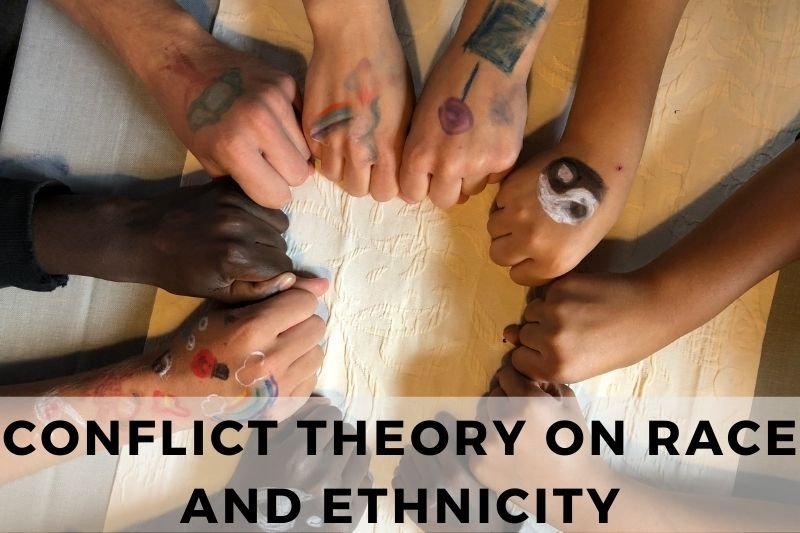
Why do racial and ethnic conflicts persist in society? Conflict Theory explains these tensions through power struggles and economic disparities. It views society as a system where dominant groups maintain control over resources while marginalized groups resist oppression. Karl Marx laid the foundation for this theory, emphasizing class struggles.
Later, scholars expanded it to include race and ethnicity. The theory highlights how systemic inequality fuels division and conflict. It also examines how social institutions reinforce racial hierarchies. Understanding this perspective helps explain discrimination, systemic racism, and resistance movements. Conflict Theory sees these struggles as key drivers of social change.
What is Conflict Theory?
Conflict Theory is a sociological perspective that views society as an arena of inequality that generates conflict and social change. It emphasizes the role of power, wealth, and social structures in shaping relationships and interactions. According to this theory, different groups in society—such as the wealthy vs. the poor, the employers vs. the workers—compete for resources, power, and control. These conflicts arise because of disparities in wealth, status, and power, and are seen as driving forces behind social change.
The theory was primarily developed by Karl Marx, who argued that societal structures were influenced by economic factors and that class struggles between the bourgeoisie (the capitalist class) and the proletariat (the working class) were central to understanding social dynamics. Over time, other theorists, such as Max Weber and C. Wright Mills, expanded upon these ideas, focusing on other aspects of inequality, including race, gender, and authority.
Key points of Conflict Theory include:
- Inequality: Society is divided into groups with unequal access to resources, leading to conflicts.
- Power Struggles: Those in power use their position to maintain control and dominance.
- Change: Conflict is seen as a driving force for societal change and transformation.
- Criticism of Social Systems: It often critiques the status quo and existing power structures, arguing that they benefit a few at the expense of the many.
In essence, Conflict Theory underscores the notion that social order is maintained not by consensus, but by domination and coercion, often masked as legitimate authority.
Conflict Theory on Race and Ethnicity
Definition
Conflict Theory on race and ethnicity examines how racial and ethnic groups compete for power, resources, and social status. It suggests that the dominant racial or ethnic group benefits from the social structures in place, while marginalized groups face discrimination and unequal access to resources. This theory focuses on how historical and systemic inequalities are perpetuated, contributing to ongoing racial and ethnic conflicts. By analyzing the power dynamics between groups, Conflict Theory helps explain why racial disparities persist and how they impact society’s social, political, and economic structures.
Core Concepts
Power and Inequality
The concept of power and inequality in Conflict Theory focuses on the way that dominant groups use their power to maintain control over marginalized racial and ethnic communities. Power is not equally distributed, and this disparity leads to tensions and conflicts. The dominant group’s ability to shape laws, institutions, and cultural norms ensures that their position is maintained. This unequal distribution of power keeps minority groups in a subordinate position, leading to systematic oppression. For example, laws that disproportionately impact African Americans, such as the War on Drugs, can be seen as a tool for maintaining the dominance of white communities over people of color.
Economic Exploitation
Economic exploitation in the context of race and ethnicity refers to the way that dominant racial or ethnic groups use marginalized groups for cheap labor and economic gain. Historically, this has been seen in the exploitation of African slaves and, later, immigrant laborers. These communities are often relegated to low-wage jobs, with few opportunities for advancement. In contemporary society, this exploitation continues through practices like wage gaps between white workers and workers of color, or the disproportionate representation of minority groups in low-paying, unstable industries. Such exploitation keeps marginalized groups economically dependent and reinforces social hierarchies.
Social Stratification
Social stratification refers to the way society is divided into layers or classes based on various factors, including race and ethnicity. In a racially stratified society, certain racial or ethnic groups are placed at the top of the social hierarchy, while others are relegated to the bottom. This stratification is maintained through discriminatory practices in education, employment, and housing. For example, studies have shown that people with “ethnic-sounding” names are less likely to receive job interviews compared to those with “white-sounding” names, even with identical qualifications. This social stratification results in unequal access to resources and opportunities, reinforcing racial and ethnic divides.
Cultural Hegemony
Cultural hegemony, a concept introduced by Antonio Gramsci, explains how the dominant group in society controls cultural norms, values, and beliefs to maintain their dominance. In the context of race and ethnicity, this means that the cultural norms of the dominant racial group are imposed on society as a whole, while the cultures and traditions of marginalized groups are undervalued or suppressed. For example, mainstream media often portrays white culture as the standard, while the cultures of African Americans, Native Americans, and other racial minorities are underrepresented or misrepresented. This cultural dominance affects the way individuals in marginalized communities perceive their own identities and limits their opportunities for social mobility.
Resistance and Conflict
Resistance and conflict are central to Conflict Theory on race and ethnicity, as marginalized groups challenge the structures that oppress them. Social movements, such as the Civil Rights Movement or the Black Lives Matter movement, are examples of collective resistance to racial and ethnic inequality. These movements aim to disrupt the power dynamics that maintain the status quo and demand equality and justice. Conflict arises when marginalized groups push for changes to systems that perpetuate racial and ethnic inequalities, and these conflicts often result in social change. In some cases, such resistance can lead to significant legal, political, and social reforms, but it can also face intense opposition from those who benefit from the existing structures.
Related Contemporary Issues
Systemic Racism and Its Implications
Systemic racism refers to the ways in which racial discrimination is embedded within the policies, practices, and structures of society. It is not just about individual prejudices but involves institutional and structural biases that disadvantage people of color. For instance, systemic racism can be seen in the criminal justice system, where people of color are disproportionately arrested, charged, and sentenced. This racial disparity continues through unequal access to healthcare, education, and housing. The cumulative effect of these systemic inequities is that people of color face long-term barriers to economic and social mobility.
The implications of systemic racism are far-reaching. It affects the mental and physical health of marginalized communities and contributes to persistent wealth gaps between racial groups. Children of color may not have access to quality education, affecting their future opportunities. In the workplace, systemic racism can manifest as hiring biases and wage disparities. As a result, systemic racism continues to perpetuate cycles of poverty and inequality, making it difficult for people of color to achieve the same standard of living as their white counterparts. Addressing systemic racism requires a comprehensive, long-term effort to reform policies and practices across multiple sectors of society.
Intersectionality of Race, Ethnicity, and Class
Intersectionality is a framework for understanding how different aspects of a person’s identity—such as race, ethnicity, class, gender, and sexuality—interact to create unique systems of privilege and oppression. When examining race and ethnicity, it’s important to consider how they intersect with other social factors, particularly class. For example, a Black person from a low-income background may face different challenges compared to a Black person from an affluent family. The experiences of racial oppression are not uniform and can vary significantly depending on an individual’s socioeconomic status.
This intersectional approach highlights how people who belong to multiple marginalized groups face compounded forms of discrimination. A Latina woman from a working-class family may experience racial discrimination, gender-based oppression, and economic exploitation all at once. Similarly, Black immigrants from economically disadvantaged backgrounds may face a combination of xenophobia, racism, and classism. Understanding intersectionality provides a more nuanced view of social inequality, showing that race and ethnicity alone do not fully explain the challenges individuals face. Addressing these overlapping forms of oppression is critical to achieving social justice and equality.
Movements and Responses to Racial Conflicts
Movements and responses to racial conflicts are essential in addressing the inequalities faced by marginalized communities. Over the years, several movements, such as the Civil Rights Movement, Black Lives Matter, and Indigenous rights movements, have emerged to challenge racial and ethnic injustices. These movements are crucial because they not only raise awareness of racial issues but also demand concrete changes in policies and practices. For example, the Civil Rights Movement led to landmark legislation like the Civil Rights Act of 1964 and the Voting Rights Act of 1965, which aimed to eliminate discrimination in public spaces and voting.
The responses to these movements, however, are often met with resistance from those who benefit from existing racial hierarchies. In some cases, movements may face political and social pushback, which can slow or block efforts for change. For example, the Black Lives Matter movement, which began in response to police brutality, has been met with attempts to discredit it, with some arguing that it promotes violence or division. Despite this, movements continue to play a vital role in challenging institutionalized racism and pushing for legal, social, and cultural transformations that can lead to more equal and just societies.
Closing Thoughts
Conflict Theory on race and ethnicity provides a lens through which we can understand the deep-rooted inequalities and power dynamics that shape society. It helps explain why racial and ethnic conflicts persist and why marginalized groups continue to face systemic barriers.
By examining core concepts such as power, economic exploitation, and social stratification, we gain insights into how these inequalities are perpetuated. Movements for racial justice are vital in challenging these structures and pushing for change. However, lasting social change requires a collective effort to dismantle the systems that maintain racial and ethnic disparities across all sectors of society.