
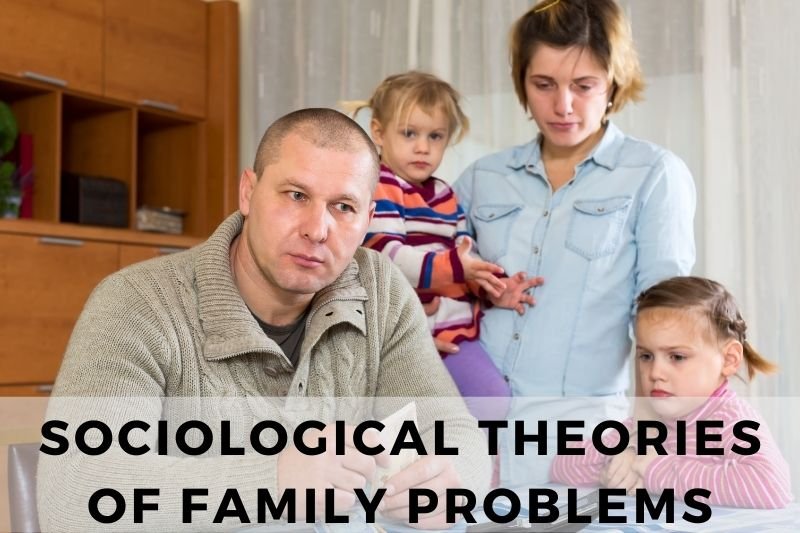
What shapes the problems families face today? Sociological theories offer different perspectives on family issues. These theories help us understand the underlying causes of conflict, roles, and expectations within families. By analyzing these perspectives, we gain insight into how societal influences affect family dynamics. This article explores key sociological theories and their relevance to family problems, providing a clear view of how each theory interprets these challenges.
Overview of Sociological Theories
Sociological theories are frameworks that help explain how society influences individual behavior and interactions. These theories explore the relationship between individuals and the social structures in which they live. They provide insights into how social norms, values, and institutions shape behavior and contribute to societal problems. In the context of family dynamics, sociological theories look at how family members interact with one another and how external factors, like social norms or economic conditions, affect these interactions. Theories also explore how family problems arise and how they are influenced by the broader society.
The relevance of these theories to family dynamics is crucial. Families are deeply influenced by social structures, including cultural norms, laws, and economic systems. For example, societal expectations about gender roles or economic pressure can lead to conflict or stress within families. Understanding these forces helps to identify the root causes of family problems, whether it’s issues related to communication, power imbalances, or emotional stress. Sociological theories provide a framework for understanding these challenges and offer potential solutions by examining both individual behaviors and social systems.
Major Sociological Theories Related to Family Problems
Functionalism
Functionalism views society as a system of interrelated parts, each serving a function that contributes to the stability and well-being of society. In the context of family, functionalists believe that each member plays a specific role that helps maintain family stability. For example, parents provide financial support, while children contribute to emotional bonds and, eventually, social integration. When these roles are disrupted—through divorce, financial strain, or neglect—the family unit can experience dysfunction, leading to broader social problems.
Functionalism explains family problems by emphasizing how disruptions to these roles can destabilize the family structure. Issues such as divorce, domestic violence, or absentee parenting can disrupt family balance and impact children’s development. For instance, children from broken homes may face difficulties in school or develop behavioral problems due to the loss of emotional stability. Functionalists argue that restoring family roles and reinforcing societal norms can resolve these issues, promoting stability within both the family and society.
Conflict Theory
Conflict theory, based on the ideas of Karl Marx, suggests that family problems arise from social inequality and power struggles. It emphasizes that families, like other social institutions, are influenced by inequality related to class, gender, and power. For example, a patriarchal family structure may contribute to gender-based conflict, where women are expected to assume domestic roles, potentially leading to feelings of resentment or oppression. Conflict theory examines how unequal power dynamics within the family can result in problems such as domestic abuse or economic strain.
Through the lens of conflict theory, family problems are seen as a reflection of the wider societal inequalities. For instance, a family’s financial difficulties might not just be due to individual mismanagement but also result from broader economic inequalities. Conflict theory highlights how external factors, such as societal structures and economic systems, create and perpetuate family issues. By addressing these larger inequalities, conflict theory suggests, family problems could be alleviated, leading to more balanced and equitable relationships within the home.
Symbolic Interactionism
Symbolic interactionism focuses on the small-scale, everyday interactions between family members. It argues that family problems are often rooted in misunderstandings or misinterpretations of behavior, roles, and expectations. For example, a child may feel neglected if parents fail to communicate their affection clearly. This theory emphasizes the subjective nature of family experiences, suggesting that individuals in families interpret each other’s actions through shared symbols and meanings. Family problems arise when these symbols are misunderstood or when the meanings assigned to certain behaviors change over time.
In symbolic interactionism, the emphasis is on communication and the interpretation of symbols within the family unit. A common example is how parents may have different expectations of their children based on cultural or personal beliefs, leading to tension. Children may interpret these expectations as unfair or overly demanding, resulting in conflict. The theory suggests that improving communication and ensuring shared understanding between family members can reduce conflicts and improve family dynamics. It also highlights how changing the way family members interpret each other’s actions can have a significant impact on resolving problems.
Social Constructionism
Social constructionism suggests that family problems arise from the way society constructs and defines family roles and relationships. According to this theory, the family is not a natural, unchanging entity but a social construct shaped by cultural and historical contexts. Family problems, therefore, are not inherent but are created and defined by societal norms and expectations. For example, the idea of the “perfect family” often promotes unrealistic expectations, leading to feelings of inadequacy or failure when families do not meet these standards.
Social constructionism looks at how family problems can be framed within social contexts, such as cultural norms around marriage, parenting, and gender roles. These norms can create pressures that contribute to conflict within families. For instance, a family that does not conform to traditional norms may face stigma, leading to internal conflicts or social exclusion. By deconstructing and questioning these societal expectations, social constructionism provides a way to challenge harmful norms and redefine family structures in ways that reduce conflict and promote healthier dynamics.
Comparative Analysis of Theories
1. Functionalism
- Strengths: Functionalism provides a clear and structured approach to understanding family roles and relationships. It highlights how each member’s role contributes to family stability, making it easy to identify potential disruptions that may cause family problems. This theory helps clarify the importance of maintaining social order and supporting functional family units for societal well-being, making it useful in discussions about restoring stability in family dynamics.
- Weaknesses: One major weakness of functionalism is its tendency to overlook conflict or power imbalances within the family. It assumes that all family roles are positive and contribute to social stability, which can ignore issues like gender inequality, abuse, or neglect. By focusing too much on the ideal family structure, functionalism may fail to address real, harmful problems that some families face.
- Best Situations for Use: Functionalism is best applied in situations where the focus is on understanding the role of family structures in maintaining social stability. It works well in studies of traditional families, societal norms, and the roles of family members in maintaining order. It’s also useful when exploring family functions like caregiving, economic support, or emotional bonding in stable environments.
2. Conflict Theory
- Strengths: Conflict theory excels at exposing the power dynamics and inequalities within families. It provides a lens through which to analyze issues like domestic violence, gender inequality, and economic struggles, which are often the root causes of family problems. It emphasizes how larger societal structures, such as class or patriarchy, influence family relationships, offering a critical perspective on family conflict.
- Weaknesses: Conflict theory tends to overemphasize conflict and inequality, often neglecting the positive aspects of family relationships. It can portray family dynamics as purely adversarial, missing the potential for cooperation or harmony in certain situations. This theory may also be criticized for not offering clear solutions for resolving family issues, as it focuses more on identifying problems rather than offering pathways to resolution.
- Best Situations for Use: Conflict theory is most useful in examining families facing significant external pressures such as economic hardship, gender inequalities, or systemic discrimination. It’s especially valuable in understanding issues like domestic violence, unequal gender roles, or class-based family struggles. This theory works well in situations where the focus is on challenging social structures that influence family dynamics.
3. Symbolic Interactionism
- Strengths: Symbolic interactionism provides a deep understanding of everyday family interactions and the importance of communication and shared meanings. It focuses on how family members interpret each other’s actions and the impact of these interpretations on relationships. This theory is particularly useful in understanding misunderstandings, emotional conflicts, and communication breakdowns within families.
- Weaknesses: A limitation of symbolic interactionism is its narrow focus on small-scale interactions, which can overlook larger societal or structural issues affecting families. It might not fully address broader issues such as poverty, societal expectations, or systemic inequalities, which play a significant role in family problems. Additionally, it can be overly focused on individual perspectives rather than collective social forces.
- Best Situations for Use: Symbolic interactionism is best suited for exploring family communication and relationships on an interpersonal level. It is useful when studying the dynamics of family roles, emotional exchanges, and how individual perceptions shape family conflict. It’s also valuable for understanding how changing social symbols and meanings influence family life, such as shifts in cultural expectations of marriage or parenting.
4. Social Constructionism
- Strengths: Social constructionism offers a flexible and critical approach to understanding how societal norms and expectations shape family roles and relationships. It challenges the assumption that family dynamics are fixed and helps to deconstruct traditional ideas about family structure. This theory highlights how cultural and historical contexts influence family problems, encouraging a more inclusive perspective on non-traditional family arrangements.
- Weaknesses: A key weakness of social constructionism is that it may downplay the individual experiences of family members by focusing too heavily on societal constructs. It can also be criticized for being too abstract and theoretical, making it harder to apply in practical, real-world situations. Additionally, its critique of traditional family structures may not always address the immediate, tangible issues families face.
- Best Situations for Use: Social constructionism is ideal for examining how cultural norms and historical contexts shape perceptions of family roles. It works well in analyzing families that challenge traditional structures, such as single-parent households, LGBTQ+ families, or multicultural families. It’s especially useful in discussions about how societal expectations create pressures on families and influence family problems.
Closing Thoughts
Sociological theories provide valuable insights into the complex issues families face. Each theory—whether functionalism, conflict theory, symbolic interactionism, or social constructionism—offers a unique perspective on family dynamics and the root causes of problems. Understanding these theories helps to identify the various factors contributing to family conflict and dysfunction.
While no single theory can fully explain all family issues, combining these perspectives can guide interventions and solutions. By applying these theories in real-life contexts, we can better address family problems and foster healthier, more stable family environments.