
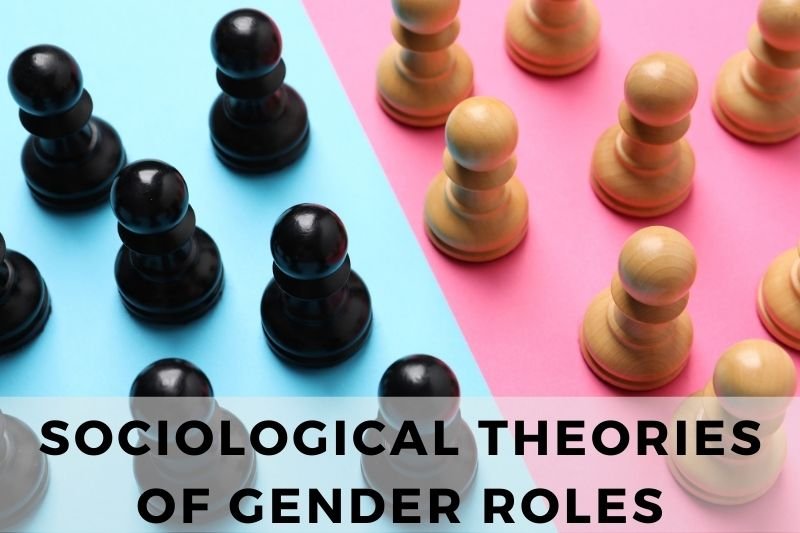
How do we come to understand what it means to be male or female in society? Sociological theories of gender roles offer various perspectives on how these roles are created and maintained. These theories help us understand the impact of gender expectations on individuals and society.
By exploring different viewpoints, we can better grasp how gender roles influence behavior, opportunities, and power dynamics. This article examines key sociological theories and their explanations of gender roles in society.
Key Sociological Theories of Gender Roles
Functionalism
Functionalism views gender roles as essential for the stability and functioning of society. According to this perspective, each gender has specific roles that contribute to social cohesion. Men and women fulfill distinct responsibilities, ensuring that societal needs are met. For instance, men may traditionally be seen as breadwinners, while women take on caregiving roles. These roles create a predictable structure that helps maintain order and efficiency in society. Functionalists believe that gender roles promote social integration and harmony by minimizing conflict.
However, functionalism has faced criticism for its emphasis on traditional roles, which can limit individual freedom and reinforce inequality. Critics argue that this theory ignores the ways in which gender roles can be restrictive, particularly for women. By suggesting that the division of labor is “natural,” functionalism overlooks the changing roles in modern society, where both men and women can participate equally in the workforce and family life.
Conflict Theory
Conflict theory emphasizes the role of power struggles in shaping gender roles. According to this perspective, gender roles are not neutral or beneficial to all, but are a product of the competition for resources and power between different groups. Men, as the dominant group, maintain control over resources and institutions, reinforcing gender inequality. This is seen in how men traditionally occupy higher-paying jobs and leadership positions, while women are often confined to lower-status, lower-paying roles. Gender roles, from this viewpoint, serve to perpetuate male dominance and preserve existing power structures in society.
Conflict theorists argue that gender inequality is not an accident but a product of social, political, and economic forces. By highlighting the structural disadvantages faced by women, conflict theory offers a framework for understanding how gender roles are used to sustain the patriarchal system. For example, the wage gap between men and women or the underrepresentation of women in politics are outcomes of this unequal distribution of power. In contrast to functionalism, conflict theory challenges the idea that gender roles are beneficial for society as a whole.
Symbolic Interactionism
Symbolic interactionism focuses on the day-to-day interactions and socialization processes through which gender roles are learned and enacted. According to this theory, gender is not something we are born with, but something we perform based on societal expectations. Children learn gender norms through interactions with family members, peers, teachers, and media. For example, boys may be encouraged to play with trucks while girls may be given dolls, reinforcing traditional gender expectations. These actions shape individual behavior and reinforce gender norms over time.
Symbolic interactionism also highlights how people “do” gender in everyday interactions, meaning they actively construct their gender identities based on societal expectations. This theory stresses that gender roles are fluid and subject to change as individuals negotiate their identities in different contexts. For instance, in more progressive societies, there may be greater acceptance of non-binary gender identities, challenging traditional ideas of male and female roles. This theory shows that gender roles are not fixed but shaped by continuous social interaction.
Social Constructionism
Social constructionism argues that gender roles are not biologically determined but are constructed through social processes. This perspective emphasizes the influence of culture and society in shaping our understanding of what it means to be male or female. Gender is learned through socialization and reinforced by cultural norms, media, and institutions. For example, the idea that men should be strong and women should be nurturing is a cultural construct, not an inherent trait. These roles are maintained through social institutions like family, education, and the workplace.
This theory also explains how gender roles vary across cultures and historical periods. What may be considered appropriate behavior for men and women in one society may be viewed differently in another. For example, women in some societies may have had the right to vote and participate in the workforce long before this was accepted in others. Social constructionism highlights how gender roles are fluid, shaped by ongoing cultural and social influences, rather than rooted in biology or nature.
Feminist Theory
Feminist theory focuses on how gender roles contribute to the oppression of women. It challenges the traditional power dynamics that favor men and seeks to understand the systemic inequality that shapes gender expectations. Feminist theorists argue that gender roles have historically been used to maintain patriarchal control, limiting women’s opportunities and autonomy. They emphasize the importance of examining how gender intersects with other factors like race, class, and sexuality to create complex systems of discrimination. For example, the feminist movement has fought for equal rights in areas such as voting, education, and the workplace.
Feminist theory is also divided into various waves, each with its own perspective on gender roles. The first wave focused on legal issues such as suffrage, while the second wave addressed broader social inequalities, including reproductive rights and workplace discrimination. The third wave emphasized diversity and intersectionality, highlighting the unique experiences of women from different backgrounds. Today, feminist theorists continue to critique how gender roles contribute to inequality and advocate for a more inclusive, egalitarian society.
Comparative Analysis of Theories
Similarities and Differences Among the Theories
- Functionalism vs Conflict Theory
- Functionalism views gender roles as essential parts of a smoothly operating society. Men and women are assigned complementary roles that help maintain balance and social cohesion.
- Conflict theory, in contrast, sees these roles as a source of inequality. It argues that gender roles are constructed and maintained to benefit the dominant group—historically, men—at the expense of women.
- While both theories acknowledge that gender roles serve a purpose in society, they disagree on the effect: functionalists emphasize stability, while conflict theorists emphasize exploitation and inequality.
- Symbolic Interactionism vs Social Constructionism
- Both theories stress that gender roles are learned and reinforced through social processes, not determined by biology.
- Symbolic interactionism looks closely at small-scale, daily interactions. For instance, how a teacher treats boys differently from girls can influence their behavior and sense of identity.
- Social constructionism zooms out to examine broader cultural narratives, norms, and institutional patterns that shape our understanding of gender. It explains how societies come to define masculinity and femininity differently across time and place.
- In short, symbolic interactionism focuses on individuals’ interactions; social constructionism focuses on the shared meanings developed over time.
- Feminist Theory vs Conflict Theory
- Both theories deal with inequality and power. Feminist theory evolved from conflict theory but concentrates specifically on gender-based oppression.
- Feminist theory expands upon traditional conflict ideas by adding the concept of intersectionality—examining how gender, race, class, and sexuality intersect to create unique experiences of disadvantage.
- While conflict theory may focus broadly on resource distribution and class struggle, feminist theory focuses on patriarchy and systemic sexism, especially as it affects women and marginalized genders.
- Functionalism vs Feminist Theory
- Functionalism justifies traditional roles by claiming they are necessary for the smooth functioning of society.
- Feminist theory disputes this view, arguing that these roles have historically restricted women’s rights and reinforced patriarchal dominance.
- The two stand in direct opposition. Where functionalism sees traditional roles as stabilizing, feminism sees them as instruments of oppression.
Strengths and Weaknesses of Each Theory
- Functionalism
- Strengths:
- Provides a clear explanation for why traditional roles existed in early societies, especially in pre-industrial contexts.
- Helps understand how social roles contribute to unity and predictability.
- Weaknesses:
- Lacks flexibility to explain changing gender dynamics.
- Overlooks power disparities and the negative effects of traditional roles, especially on women and gender minorities.
- Strengths:
- Conflict Theory
- Strengths:
- Sharp focus on inequality and systemic injustice.
- Explains how gender roles can maintain power hierarchies.
- Useful in critiquing policies and institutions that perpetuate discrimination.
- Weaknesses:
- Often portrays society as only conflict-driven, ignoring cooperation.
- May underplay individual agency and the possibility of mutual support between genders.
- Strengths:
- Symbolic Interactionism
- Strengths:
- Captures the complexity of gender identity and performance.
- Highlights the social learning process behind gender behavior.
- Explains how stereotypes are reinforced through communication.
- Weaknesses:
- Doesn’t fully address structural and institutionalized gender inequality.
- Too focused on individual interactions to see wider social patterns.
- Strengths:
- Social Constructionism
- Strengths:
- Demonstrates that gender norms are changeable and culturally specific.
- Useful for analyzing media, language, and institutional practices.
- Encourages questioning of taken-for-granted assumptions.
- Weaknesses:
- Lacks a strong account of how power and inequality shape constructions.
- Sometimes criticized for being overly abstract or disconnected from material realities.
- Strengths:
- Feminist Theory
- Strengths:
- Addresses the root causes of gender-based oppression.
- Promotes social justice and equality.
- Emphasizes real-world change through activism, policy, and education.
- Acknowledges complexity through intersectional analysis.
- Weaknesses:
- Critics sometimes claim it is too politically charged or activist-oriented.
- Variations among feminist schools (liberal, radical, intersectional) can make it seem fragmented or inconsistent in approach.
- Strengths:
Conclusion
Understanding sociological theories of gender roles helps explain how society shapes expectations for men and women. Each theory offers a different lens—some highlight stability, others focus on inequality or social interaction. These perspectives reveal how gender roles are taught, reinforced, and challenged.
No single theory captures the full picture, but together, they provide a deeper understanding of gender as a social construct. As society continues to evolve, analyzing gender roles through multiple frameworks remains essential. These theories not only explain the past and present but also help guide discussions on gender equity and future change.